
From RPA to intelligent automation: How AI-powered workflows are transforming enterprises

The story of automation begins with the clatter of early machines and leads us to the quiet precision of today’s AI systems. What started with simple mechanical tools designed to ease manual labor has now evolved into an advanced, intelligent technology that powers modern industries. In its earliest days, automation primarily focused on replacing repetitive human effort in areas such as automotive manufacturing, where machines took over assembly line tasks. This shift not only boosted efficiency and productivity but also laid the foundation for the intelligent automation we see today.
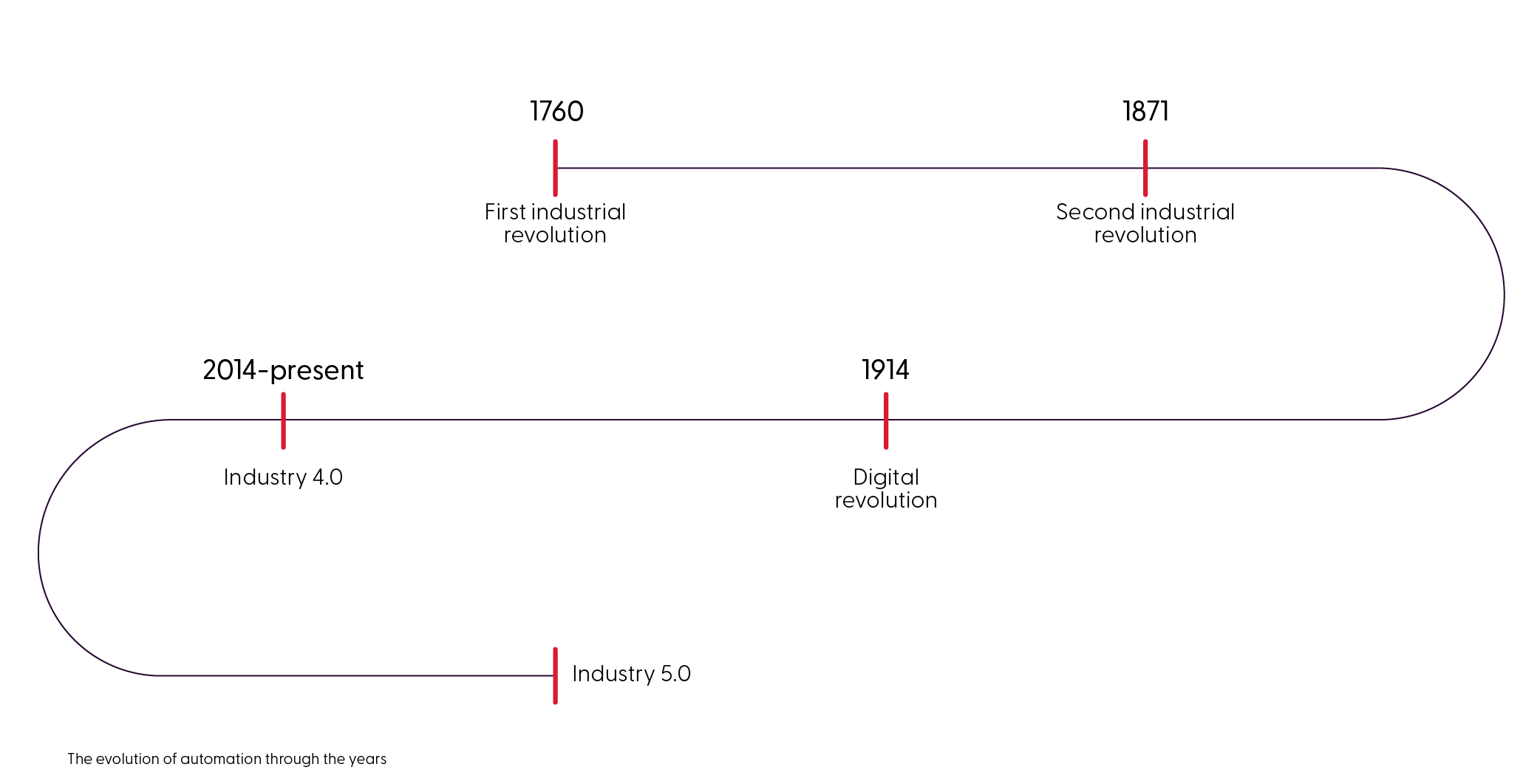
As technology advanced, automation expanded beyond physical tasks to include digital processes. The rise of computers in the late 20th century set the stage for Robotic Process Automation (RPA), which automates routine and repetitive tasks within software applications.
So, what exactly is Robotic Process Automation? Robotic Process Automation (RPA) is software that mimics human actions in digital systems handling repetitive tasks like data entry, invoice processing, and form filling with speed and accuracy. It reduces costs, minimizes human error, and frees up employees for higher-value work.
It was not till the early 2000s that Robotic Process Automation (RPA) began gaining attention. Businesses were quick to realize that it was indeed a practical way to simplify operations, reduce costs, and minimize human error. However, the fundamental shift occurred when artificial intelligence entered the scene. At VRIZE, we’ve seen automation move from tactical cost-savings to a strategic driver of transformation. By combining RPA with AI-powered analytics, we enable enterprises to design end-to-end workflows that not only execute tasks but also learn, adapt, and improve over time.
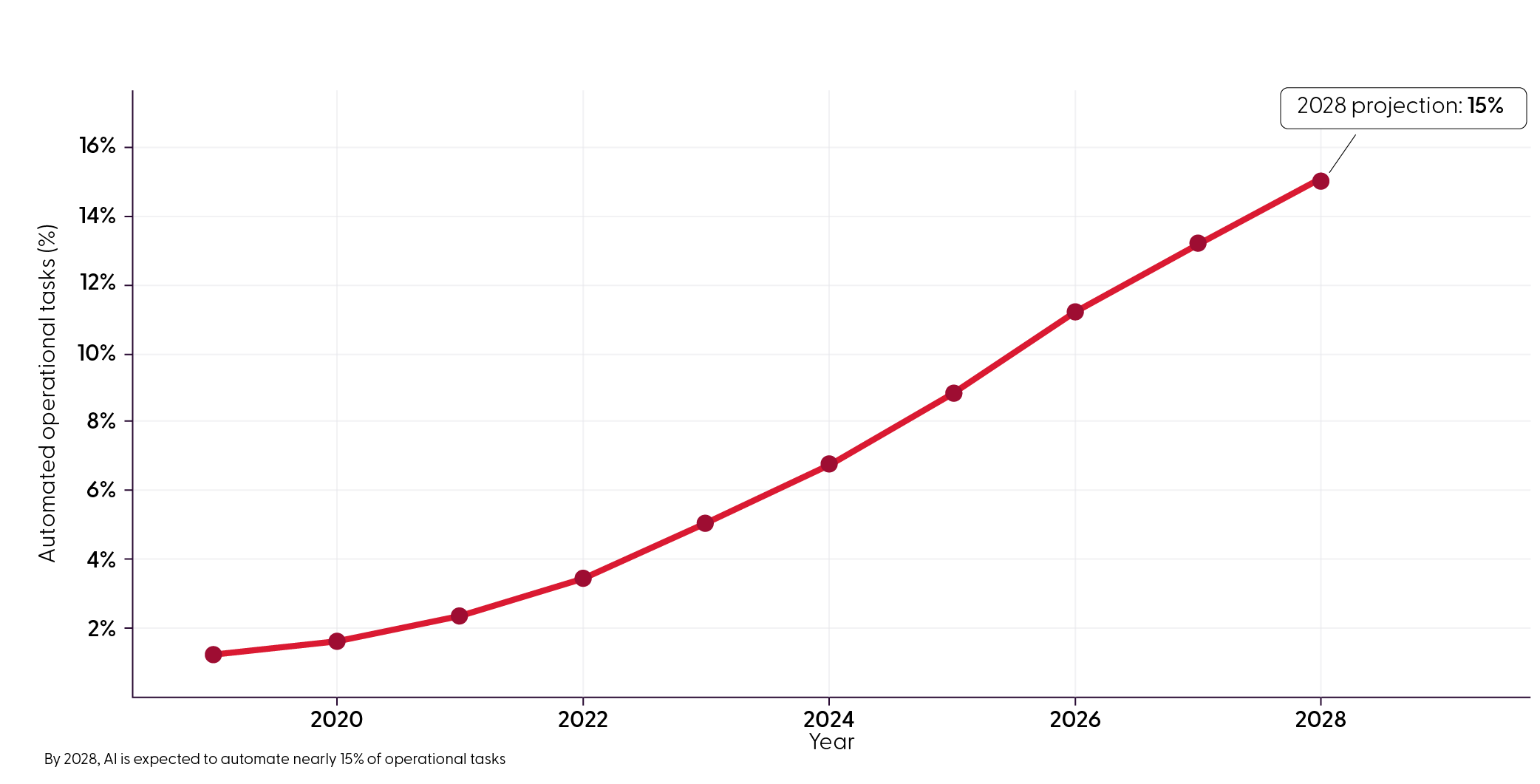
In recent years, the focus has shifted towards harnessing the potential of AI agents within automation frameworks. These agents are able to perform tasks that were previously handled by RPA, such as customer support and data analysis, thus allowing companies to focus on more important strategic initiatives. By 2028, AI will automate nearly 15% of operational tasks but the real advantage lies in how the early adopters will redirect this efficiency into faster decision-making, scalable operations, and measurable ROI.
This evolution from simple bots to intelligent agents lays the groundwork for the next stage: workflow automation. By connecting processes across teams and systems, workflow automation builds on these intelligent capabilities, transforming isolated tasks into seamless, end-to-end operations.
Workflow automation takes a leap beyond RPA by managing interconnected processes that require human decisions at various touchpoints. This form of automation is ideal for complex, multi-step processes such as procurement, employee onboarding, and customer service, ensuring that the tasks are done efficiently while still allowing a scope for necessary human input.

AI-powered analytics help analyze data and provide insights that assist in business decisions. They enhance traditional analytics by automating tasks like data cleaning and pre-processing, ensuring quality and consistency before its analysis. By further using machine learning algorithms, businesses can detect trends and anomalies in their data, which ultimately leads to better decision-making and strategic planning.
Next comes Robotic Process Automation, which allows businesses to automate routine tasks by mimicking human actions with software robots, popularly known to us as ‘bots’. These bots interact with digital systems to perform functions like data entry, invoice processing, and customer service automation. Some of the key features of RPA include rule-based decision-making, bot creation & deployment, and workflow automation. Together, they improve the overall efficiency and lower operational costs.
Intelligent Automation (IA) combines RPA with advanced technologies, such as AI and ML, to create a more flexible and responsive workflow. IA enables organizations to process complex data and enhance decision-making by using AI to analyze data trends and patterns. It is more like a comprehensive method that not only streamlines processes but also addresses the inefficiencies arising from high labor costs and ‘resource-heavy’ tasks.
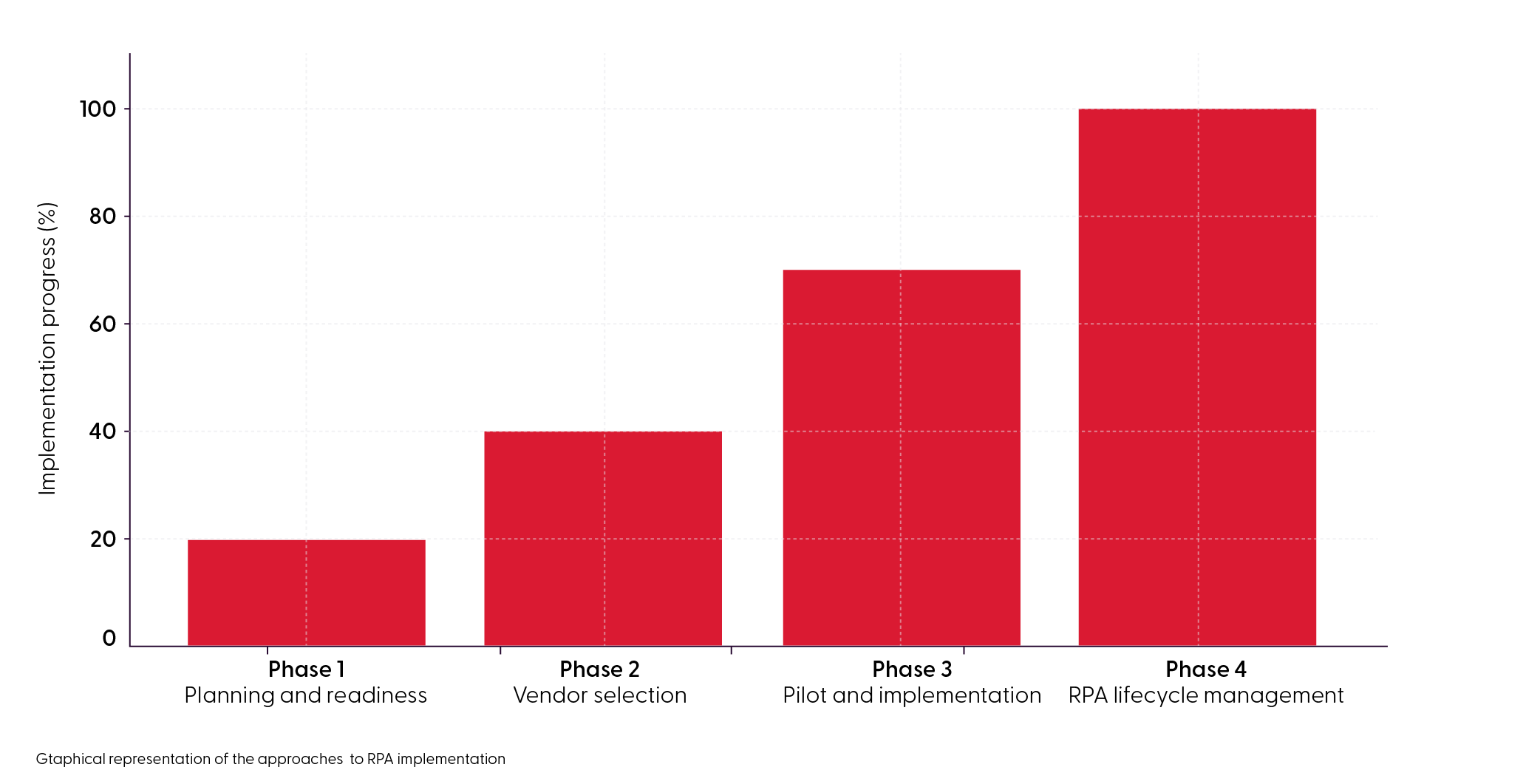
Implementing AI and RPA solutions can bring integration challenges, especially when dealing with traditional systems and overcoming data silos. We address these challenges at VRIZE by embedding governance frameworks, strengthening data pipelines, and enabling employee adoption through structured change management and reskilling. Our phased delivery model ensures automation scales without disruption.
Adopting AI and RPA solutions is not without hurdles. One of the most significant barriers lies in integrating these technologies with legacy systems. Many organizations still rely on outdated platforms that do not work seamlessly with modern tools, creating serious compatibility issues that slow down progress.
Another challenge is data quality. Since AI systems depend heavily on reliable data, problems like silos, inconsistencies, or incomplete records can reduce effectiveness, ultimately leading to biased outcomes and poor decision-making. To overcome this, businesses must strengthen data governance and ensure consistent, high-quality inputs.
Employee resistance is also common in these cases. Concerns about job loss or hesitation to embrace new technologies can lower morale and productivity. Companies must address these fears early by communicating the benefits of automation and offering reskilling opportunities that can prepare employees for the evolving roles.
Next, we have strategic planning which plays an equally crucial role. Without a clear roadmap and defined objectives, organizations risk falling short of automation’s true potential. Therefore, identifying the right processes to automate and aligning the efforts with broader business goals are essential for long-term success.
Security and privacy concerns add another layer of complexity, especially in industries that are regulated. Safeguarding sensitive data, ensuring compliance with regulations, and implementing robust security measures are becoming non-negotiable in an increasingly digital world to help build trust and prevent breaches.
Finally, talent development is a key enabler of effective implementation. The shortage of ‘AI expertise’ makes it necessary for organizations to invest in continuous learning and create specialized roles that act as a bridge between the technical and business functions. This ensures that automation tools are not just implemented but fully integrated into day-to-day workflows.
The automation landscape is on the verge of a major transformation. At VRIZE, we see this shift not just as an evolution of tools but as a reinvention of how businesses operate and grow. With AI and RPA coming together, we are now entering an era of intelligent, flexible workflows that make tasks faster, easier, and more efficient.
RPA has evolved far beyond automating repetitive tasks. With AI at its heart, it is becoming smarter and more adaptable. Many providers are embedding generative AI into their platforms, creating systems capable of handling unstructured data, learning from context, and delivering measurable business value. This shift is giving automation the intelligence it once lacked, and at VRIZE, we partner with enterprises to harness this intelligence, turning automation into a strategic asset rather than just another tactical solution.
One of the most significant advantages of this shift is decision-making speed and accuracy. AI-powered automation can process and analyze massive data streams in real time, empowering businesses to respond with precision. Whether it’s streamlining financial operations, enhancing customer experiences, or even reducing human error, we help organizations design and deploy solutions that elevate efficiency while preserving the human touch where it matters most. Curious how AI+RPA can reshape your workflows? Request a demo or submit an RFP to see how VRIZE helps enterprises unlock efficiency and growth through intelligent automation.
Looking forward, the future of automation will likely be defined by convergence. AI is beginning to integrate seamlessly with blockchain, IoT, and autonomous agents, giving rise to secure, transparent, and adaptive workflows. We see immense potential in multi-agent systems that can collaborate and evolve with minimal human oversight, unlocking entirely new possibilities for industries ready to embrace them.
Yet, this transformation is not without its challenges. Technical integration, data quality, and workforce acceptance remain critical roadblocks. VRIZE works alongside businesses to address these gaps, building a resilient infrastructure, establishing governance frameworks, and preparing teams to thrive in AI-augmented environments. For us, the next chapter of automation is not just about technology; it’s about shaping a future where people and intelligent systems work together to create sustainable, inclusive, and transformative business outcomes.
