
Designing Accessibility as a Core Digital Strategy

Building inclusive, scalable, and future-ready digital ecosystems
Accessibility has transitioned from a compliance requirement to a strategic business capability. In a digital-first economy where experiences are delivered through software, accessibility directly influences reach, trust, and long-term brand value. What was once addressed reactively is now embedded within enterprise digital transformation agendas.
This shift reflects how organizations now define digital maturity and inclusion. Accessibility is no longer only about avoiding exclusion; it is about designing usable, scalable, and sustainable digital ecosystems for everyone.
Early accessibility efforts focused primarily on physical environments. The Americans with Disabilities Act of 1990 marked a pivotal step toward removing barriers in infrastructure, transportation, and workplaces. At the time, digital accessibility was not yet a mainstream concern.
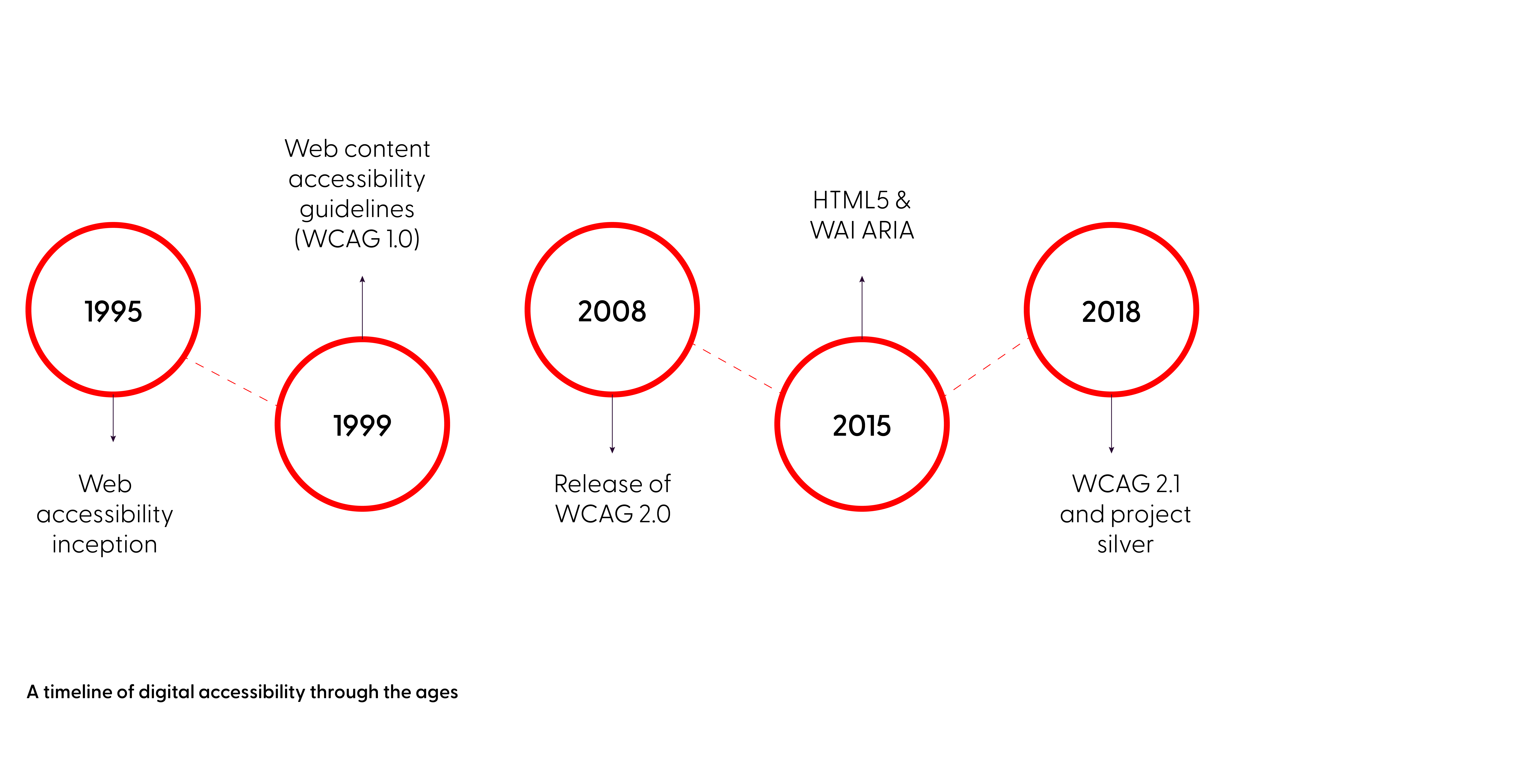
As digital platforms became central to work, commerce, education, and public services, accessibility challenges expanded beyond physical barriers. Digital, sensory, cognitive, and interaction-based barriers emerged, requiring new standards and stronger organizational accountability. This shift paved the way for scalable inclusive design frameworks used across modern digital portfolios.
The introduction of the Web Content Accessibility Guidelines (WCAG) by the World Wide Web Consortium marked a major milestone in digital accessibility. First released in 1999 and expanded through updates such as WCAG 2.1, these guidelines established a unified framework for making digital content accessible to users with visual, auditory, physical, cognitive, and age-related needs.
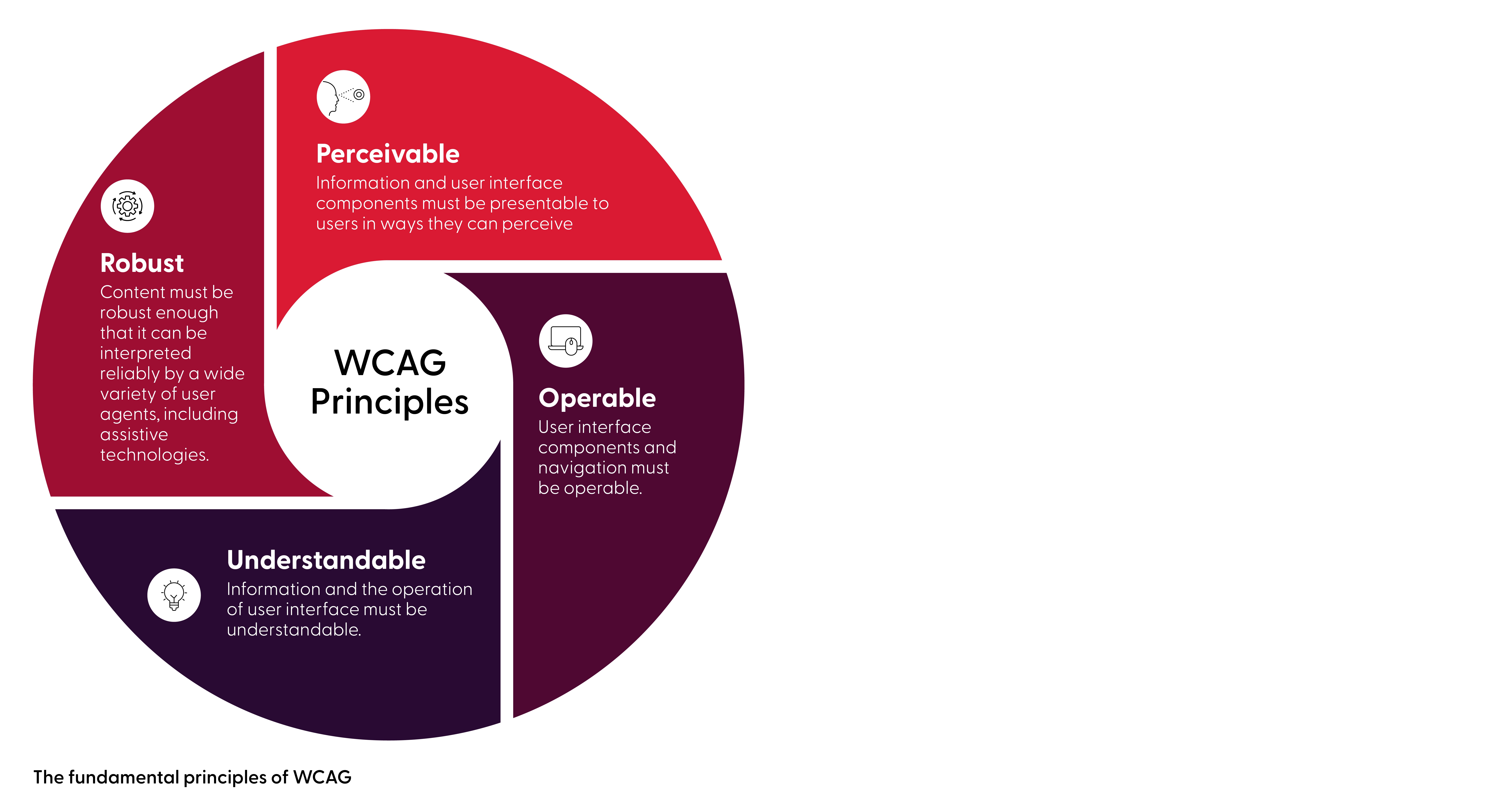
WCAG transformed accessibility from fragmented best practices into measurable, globally accepted standards for digital inclusion. Today, it underpins most accessibility regulations and serves as a common reference for consistent evaluation and implementation across enterprises.
Enterprises increasingly use WCAG as the foundation for operationalizing accessibility across design, engineering, and content workflows, ensuring consistency and scalability across digital portfolios.
Alongside global standards, legal frameworks have also reinforced enterprise accountability. Section 508 of the U.S. Rehabilitation Act mandates accessible electronic and information technology for federal agencies, while the Americans with Disabilities Act extends accessibility obligations into digital domains for both public and private organizations.
Together, these frameworks have elevated accessibility from recommendation to responsibility, with clear legal, financial, and reputational implications.
As digital maturity increased, leading organizations moved beyond applying accessibility as a post-development checklist. Accessibility is now embedded earlier within product strategy, UX design, and technology architecture through inclusive design practices.
Inclusive design improves clarity, usability, and engagement for all users. Simplified interactions, improved navigation, and clearer content often enhance overall experience quality, extending benefits well beyond users with disabilities.
Accessibility is also increasingly recognized as a significant growth multiplier. The global disability community, along with families and support networks, represents a multi-trillion-dollar market opportunity. Organizations that overlook this segment restrict both reach and revenue potential.
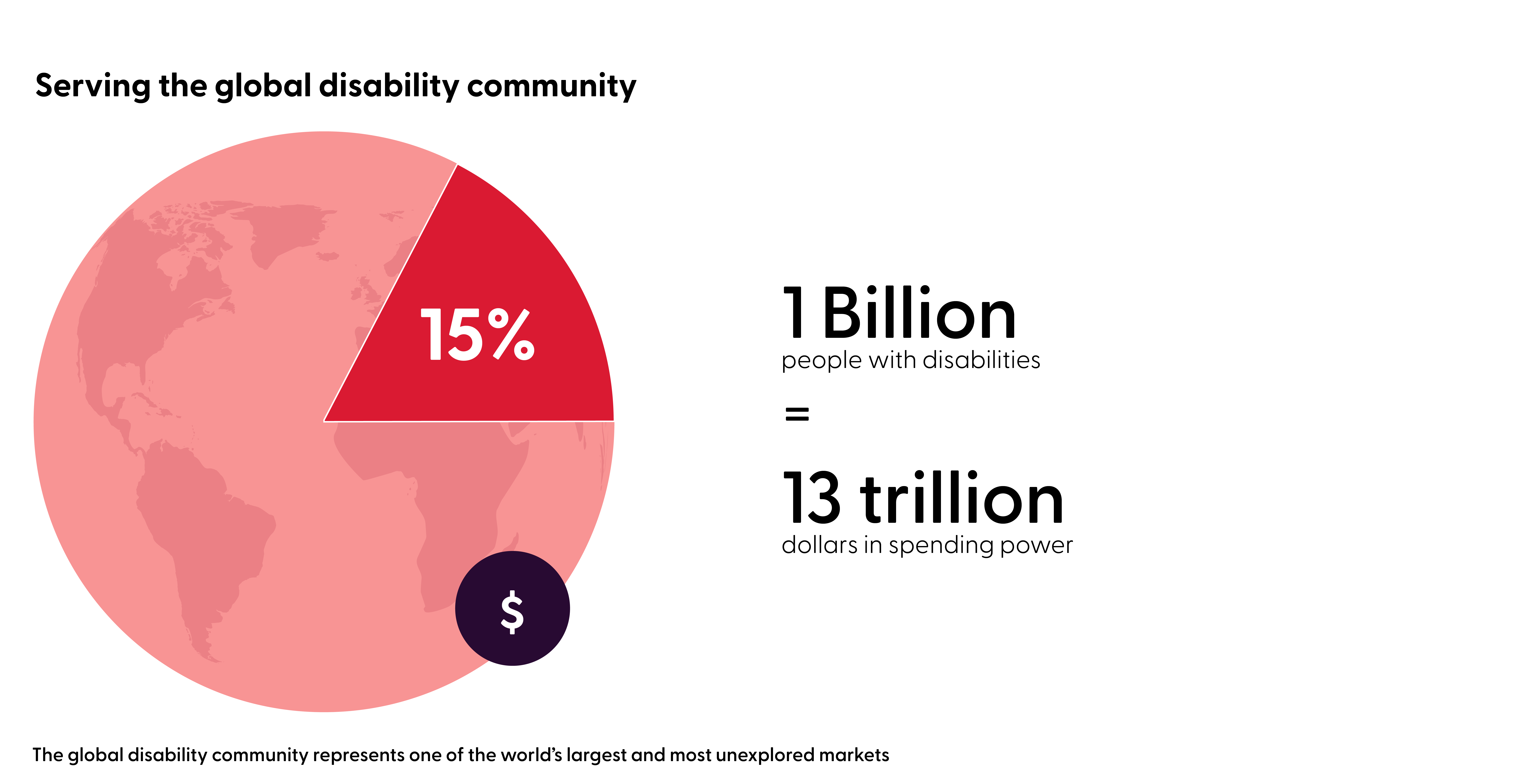
Accessible digital platforms consistently deliver higher engagement, stronger loyalty, and improved conversion, while reinforcing brand trust, responsibility, and customer centricity.
Designing accessible experiences in isolated projects is no longer enough. As digital ecosystems expand, organizations must treat accessibility as a capability supported by scalable inclusive design frameworks that enable consistency, governance, and repeatability across platforms.
Implementing accessibility at scale requires more than technical fixes. It requires structured governance, cultural alignment, and continuous execution across every function involved in digital delivery.
Accessibility cannot reside within a single team. Design, engineering, product, content, marketing, and operations all shape the final experience. Executive sponsorship is critical to secure funding, accountability, and long-term integration into roadmaps and transformation programs.
Scalable execution begins with internal standards aligned to frameworks such as WCAG and applicable regulations. Leading organizations translate external guidelines into practical playbooks and maturity models that enable consistent adoption and continuous improvement across platforms.
Accessibility must be understood across roles, not limited to specialists. Ongoing training for designers, developers, product owners, content teams, and QA builds shared capability. Many organizations also appoint accessibility champions within teams to reinforce day-to-day execution and accountability.
Accessibility is not a one-time milestone. Regular testing, including validation with users who have disabilities, helps identify issues early and reduces costly remediation later. AI-powered accessibility testing improves early detection and scalability, while human validation remains essential for real-world usability. Sustainable accessibility programs balance automation with human-centered evaluation. Read more here.
Integrating accessibility into design systems is a powerful enabler of scale. When accessible components and interaction patterns are standardized, accessibility becomes embedded by default across products rather than applied retroactively.
Effective scaling requires measurement. Accessibility scorecards, audits, automated coverage, and reporting help to track progress across portfolios. Transparency reinforces accessibility as a shared performance objective rather than a niche concern.
Despite growing awareness, execution remains uneven. Accessibility is often treated as a compliance exercise rather than a human-centered discipline, limiting ownership and investment. Resource constraints, late-stage implementation, and misconceptions around design trade-offs further slow adoption.
Measuring the impact also remains difficult. While standards provide benchmarks, they do not fully capture user confidence or experience quality, weakening the business case for sustained investment.
As digital ecosystems continue to evolve, accessibility is moving to the center of product, platform, and experience strategies. Organizations are increasingly recognizing that inclusive design is essential for serving diverse user bases and competing in global digital markets.
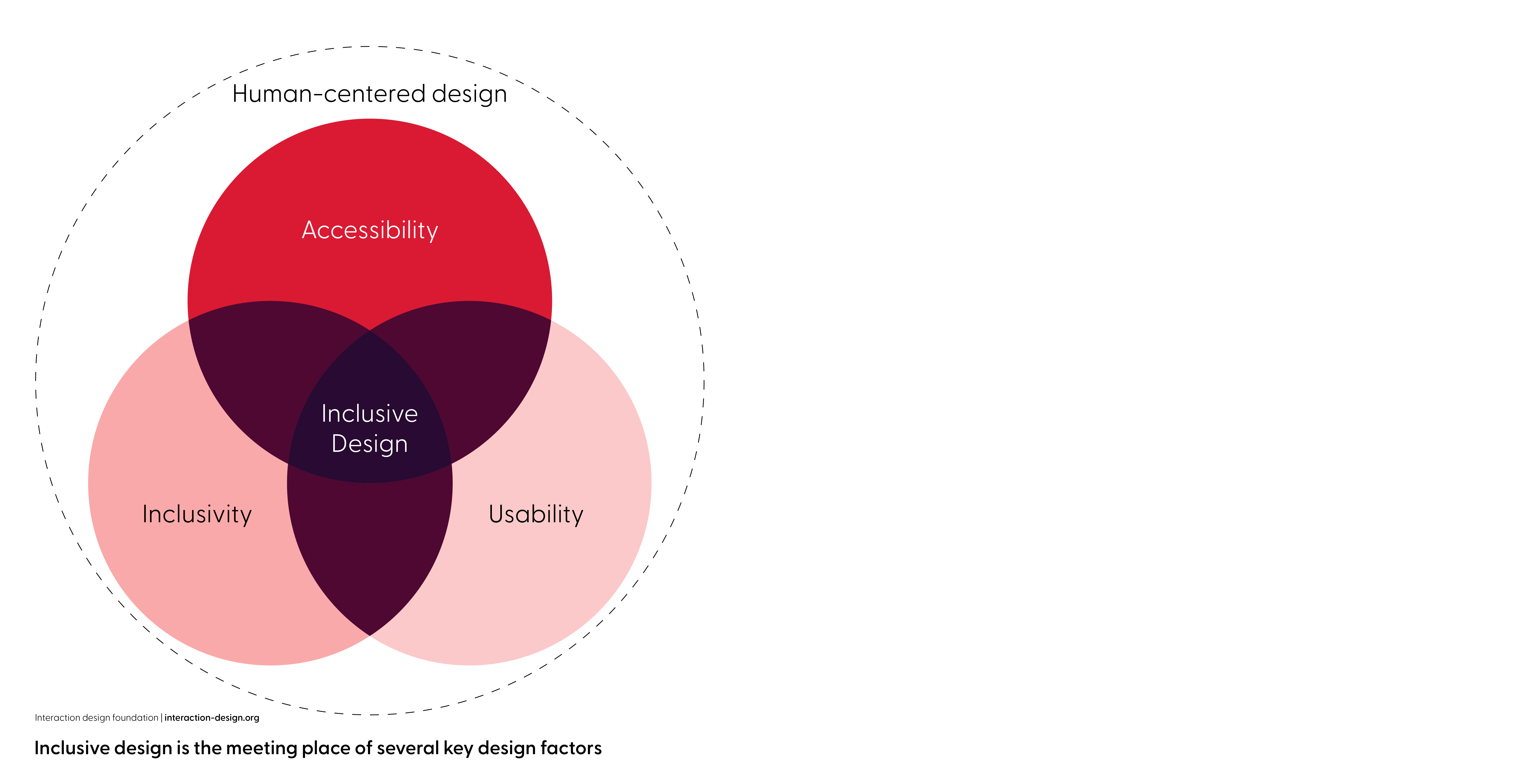
Accessibility is shifting from reactive compliance to proactive experience strategy. It is no longer only a legal safeguard, but a driver of usability, trust, and long-term digital value.
Technological innovation is accelerating this transition. The integration of AI accessibility testing into delivery pipelines is strengthening early detection and proactive remediation. At the same time, automation alone is not enough. Human feedback remains critical for understanding nuanced user interactions and contextual barriers, while data, metrics, and continuous learning form the foundation for sustained improvement.
Accessibility is no longer about meeting minimum standards. It is about setting enterprise benchmarks for experience quality, scalability, and competitive differentiation. Organizations that embed accessibility into their design systems, delivery pipelines, and governance models will not only comply with regulations; they will lead in digital trust, usability, and inclusion.
