
Future of B2B Personalization: From Algorithms to Human-Centered Design

B2B personalization is entering a new phase. For years, organizations relied on algorithm-driven models that segmented buyers by industry, company size, or role. While these methods enabled scale, they often delivered relevance without emotional or strategic resonance. Today, as buyer expectations evolve, personalization is no longer defined solely by data models or automated recommendations, but by the ability to understand context, intent, and long-term value.
Nearly 71% of B2B buyers now expect personalized experiences, and dissatisfaction rises sharply when those expectations are not met. Personalization has moved beyond tactical optimization to become a differentiator tied directly to trust, loyalty, and enduring partnerships.
Early personalization strategies focused on broad segmentation, producing standardized experiences optimized for efficiency rather than genuine relevance. As digital maturity increased and buying journeys became more complex, organizations recognized that buyers expect the same immediacy and relevance they experience as consumers.
This shift has driven personalization toward account-level and user-level approaches, where insight into context, intent, and business challenges replaces static demographics. The result is a more responsive, adaptive model aligned with how modern B2B decisions are actually made.
Advances in AI, machine learning, and analytics have accelerated this evolution. These technologies enable organizations to analyze behavior in real time, detect intent signals, surface relevant content, and automate interactions at scale. Modern platforms now support capabilities ranging from predictive recommendations to personalized content orchestration across channels.
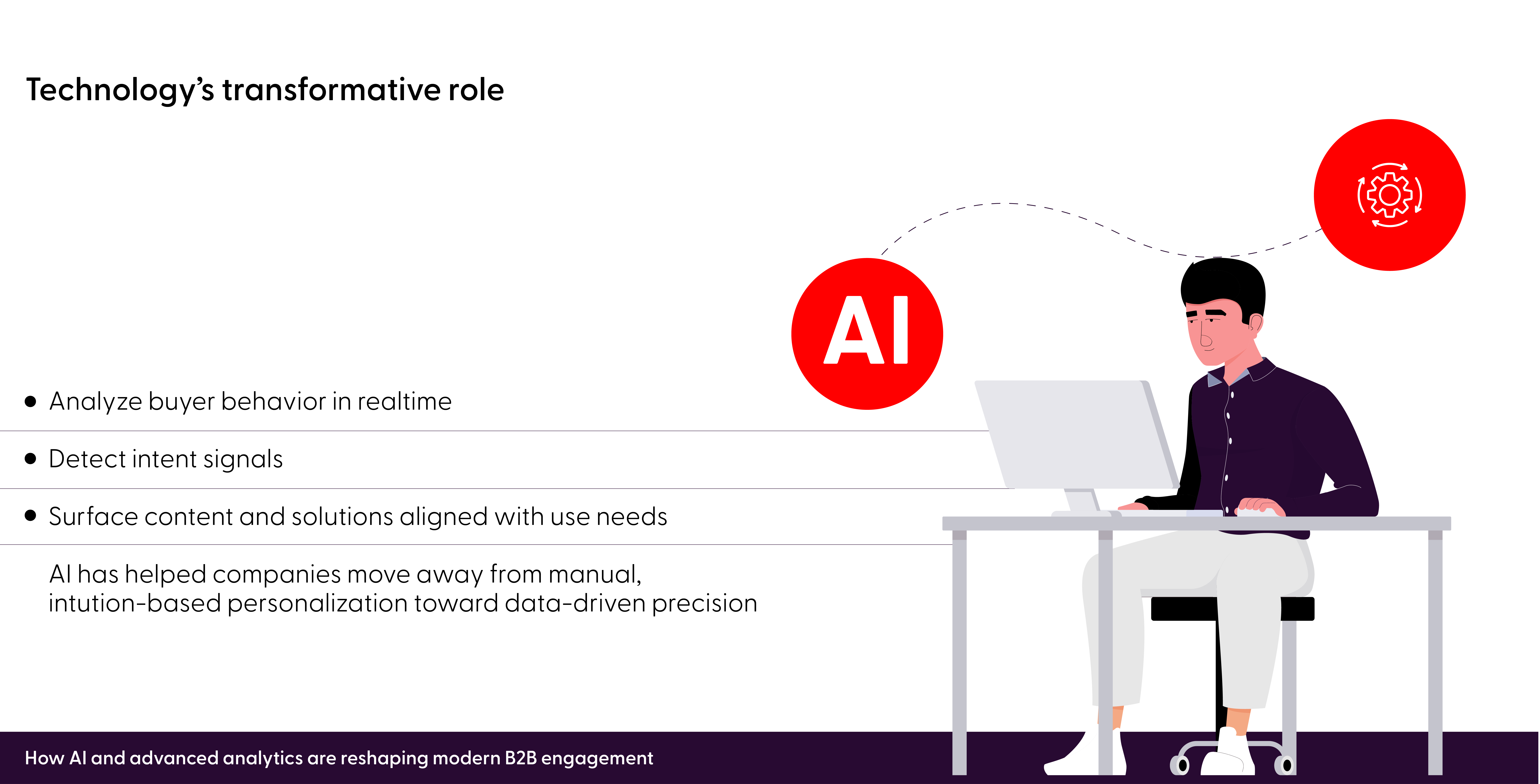
AI has enabled businesses to move beyond manual, intuition-driven personalization toward data-driven precision. Modern tools now support everything from lead scoring and account insights to predictive recommendations and personalized content workflows. However, while technology accelerates scale and accuracy, it cannot fully capture the depth of human motivations and emotional nuance inherent in B2B relationships. For a deeper look at how data science, AI, and integrated analytics drive personalized customer engagement and retention outcomes, download our whitepaper on Effective use of Data Science for Loyalty & Customer Retention.
Recognizing the limitations of purely algorithmic personalization, organizations are increasingly turning toward human-centered design. Rather than relying exclusively on quantitative signals, it integrates qualitative insight, co-creation, and iterative learning.
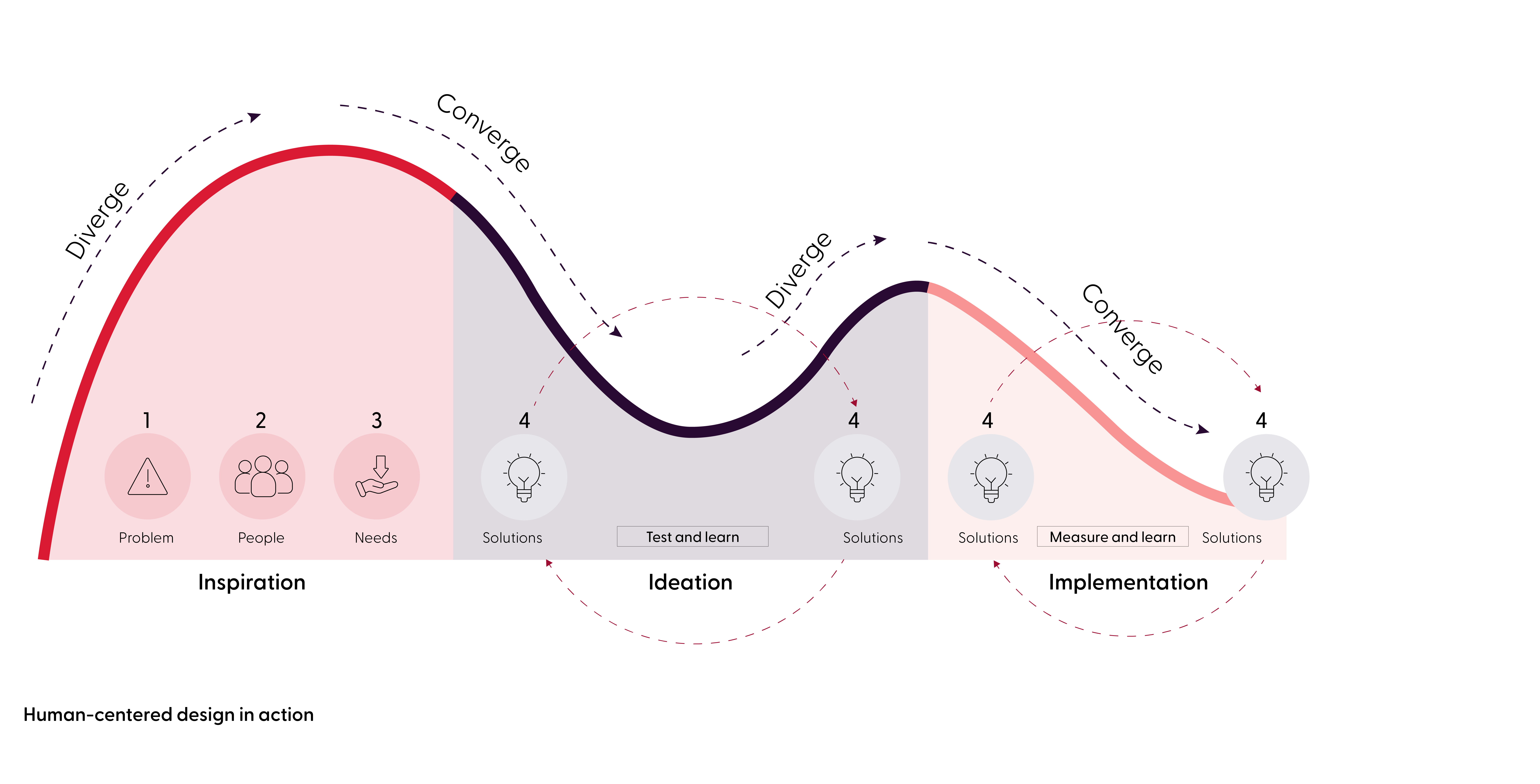
This framework transforms B2B personalization strategies from a purely marketing function into a cross-functional capability spanning product, sales, service, and leadership. When aligned with organizational culture, it enables experiences that build trust, support user agency, and strengthen long-term relationships instead of merely driving short-term conversion.
As B2B engagement spans digital platforms, sales interactions, support channels, and partner ecosystems, omnichannel cohesion has become essential. Buyers expect consistent, context-aware experiences regardless of where or how they interact with an organization.
At the same time, growing awareness of data privacy is transforming personalization expectations. Transparency, consent, and ethical data use are now foundational to trust. Organizations that give users greater visibility and control over how data is used are better positioned to sustain personalization at scale.
Embedding human-centered design into B2B personalization strategies introduces organizational and operational challenges. Resistance to change, cultural misalignment, fragmented data, and limited cross-functional collaboration often slow progress. Over-reliance on algorithms without sufficient human insight further limits effectiveness.
Successful personalization programs adopt an iterative approach grounded in experimentation, continuous feedback, and shared ownership across teams. This mindset enables learning-driven progress rather than one-time transformation efforts.
Effective measurement must extend beyond surface-level performance metrics. While indicators such as conversion rates and click-throughs remain useful, they do not fully capture experience quality.
Behavioral signals including engagement depth, feature adoption, and journey progression provide richer insight into how users interact with personalized experiences. When combined with qualitative feedback from interviews, testing, and observation, these metrics ensure B2B personalization strategies remain anchored in real user needs rather than abstract targets.
The B2B personalization landscape is undergoing a fundamental shift. Organizations are moving away from algorithm-heavy, automation-first approaches toward models that harmonize advanced technology with human insight. This evolution reflects a growing recognition that personalization is no longer achieved through data alone, but through a deeper understanding of context, intent, and trust across the buyer journey.
Several forces are shaping this next horizon. Human-centered design is emerging as a strategic differentiator, extending beyond a design methodology to influence how organizations engage customers through co-creation, empathy-driven discovery, and iterative learning. At the same time, enterprises are investing in unified data ecosystems that integrate marketing, sales, product, and service intelligence, enabling context-rich personalization across interactions. As engagement spans an expanding mix of digital and human channels, omnichannel consistency has become essential, requiring personalization to be coordinated, signal-driven, and adaptive rather than fragmented.
From VRIZE’s perspective, the future of B2B personalization is not a choice between algorithms and human insight, but a deliberate convergence of both. Technology provides the intelligence and speed required to operate at scale, while human-centered design ensures relevance, trust, and long-term value. True personalization is not about reacting to isolated data points; it is about engineering ecosystems where data, design, and decision-making work in harmony.
Scaling this vision requires more than technology. Cultural resistance, organizational silos, and limited understanding of user context can slow progress if not addressed deliberately. Success depends on leadership alignment, cross-functional collaboration, and measurement that goes beyond surface-level KPIs to include behavioral and qualitative insight.
In an increasingly experience-driven B2B landscape, personalization is no longer about reacting to data signals in isolation. It is about engineering systems that respect human context while scaling intelligently, turning personalization into a durable source of competitive advantage.
